
Heritage site · Gansu
Mogao Caves, Dunhuang
Buddhist murals and sculptures on the Silk Road, begun in 366 AD.
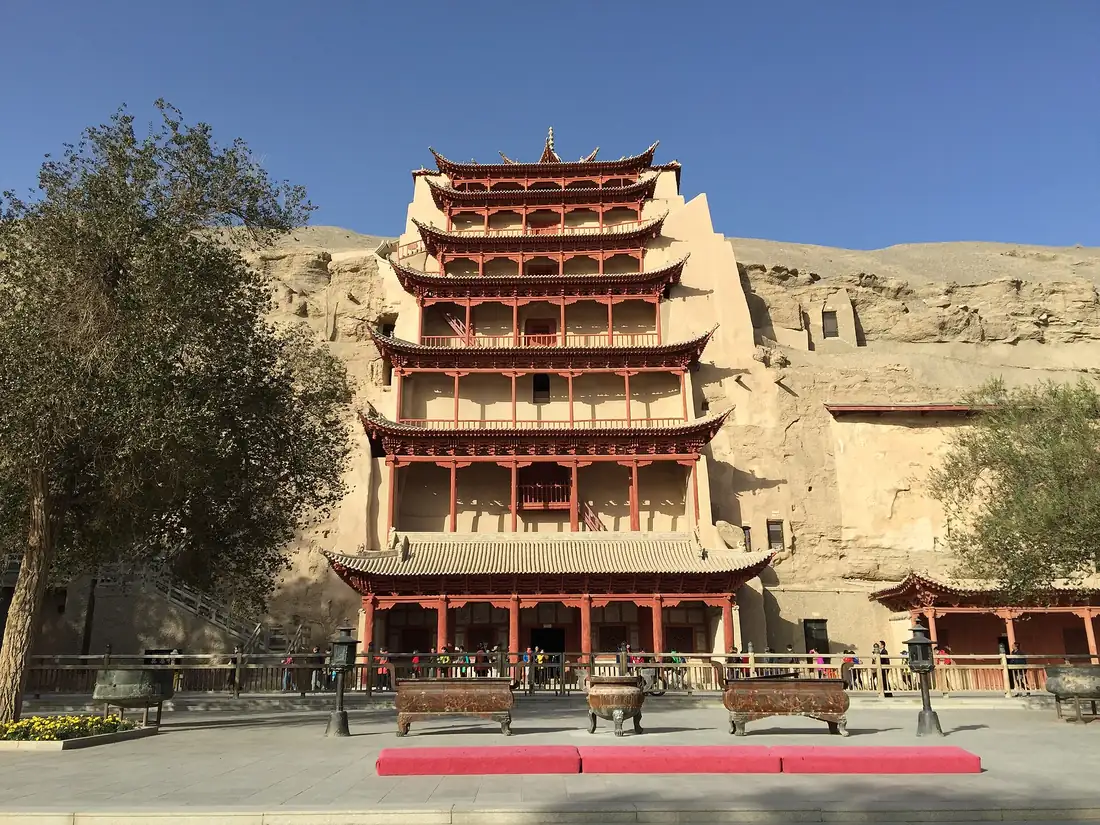
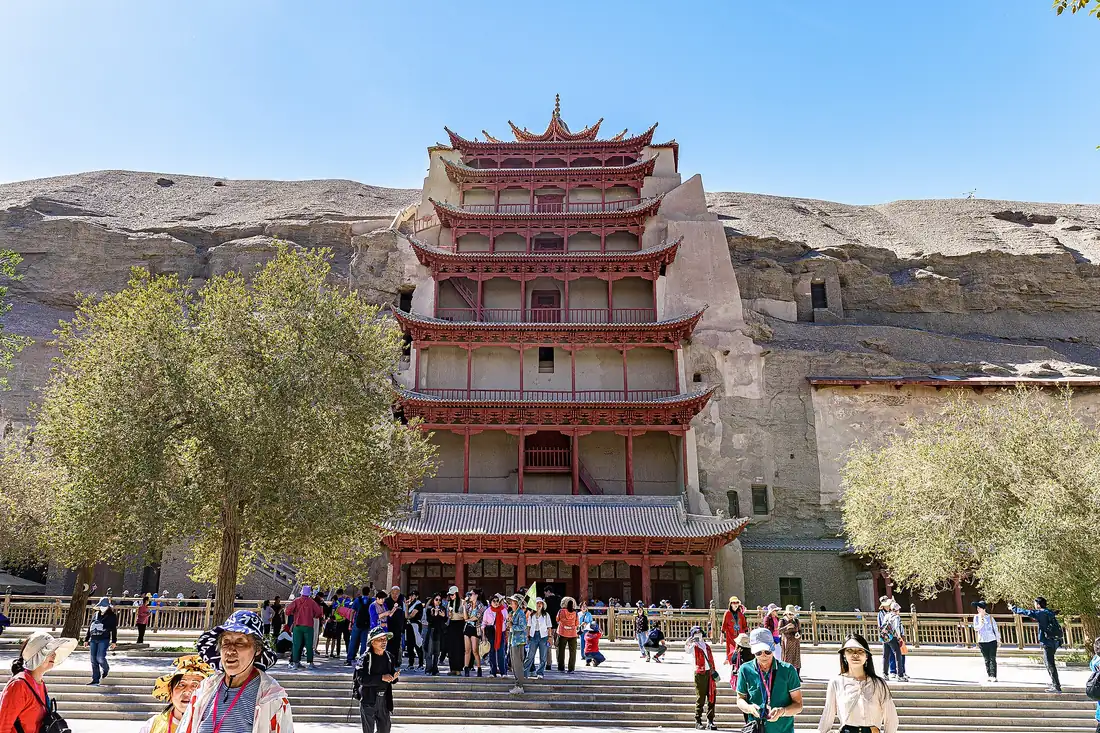
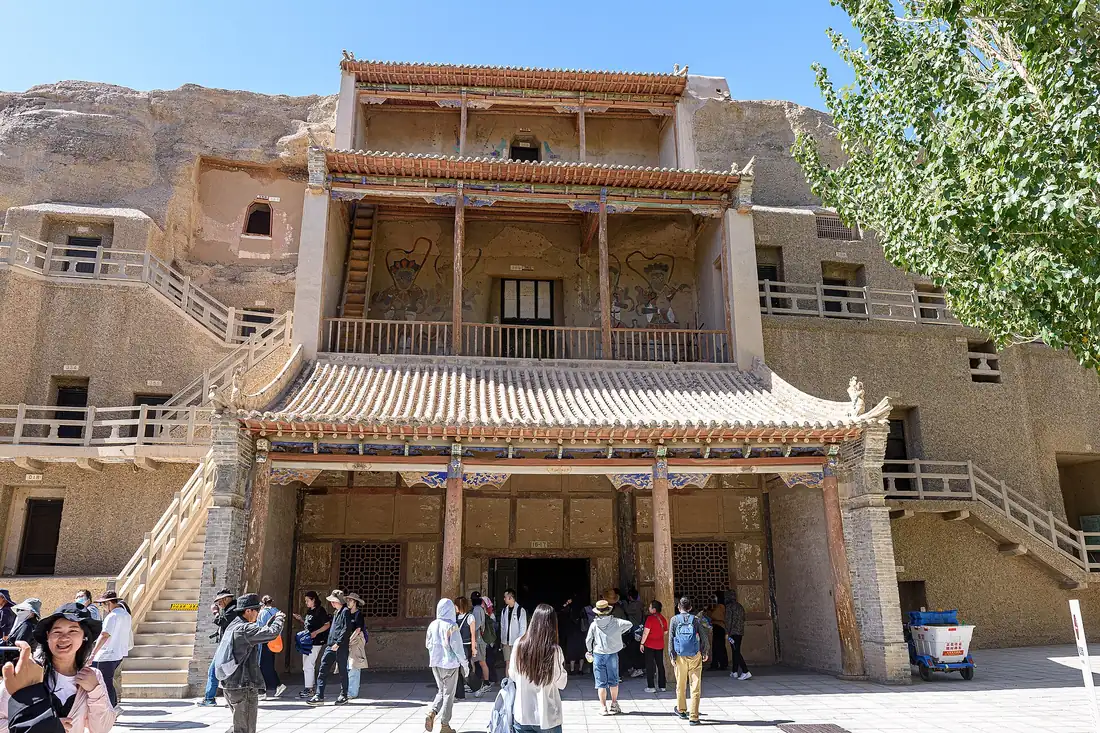
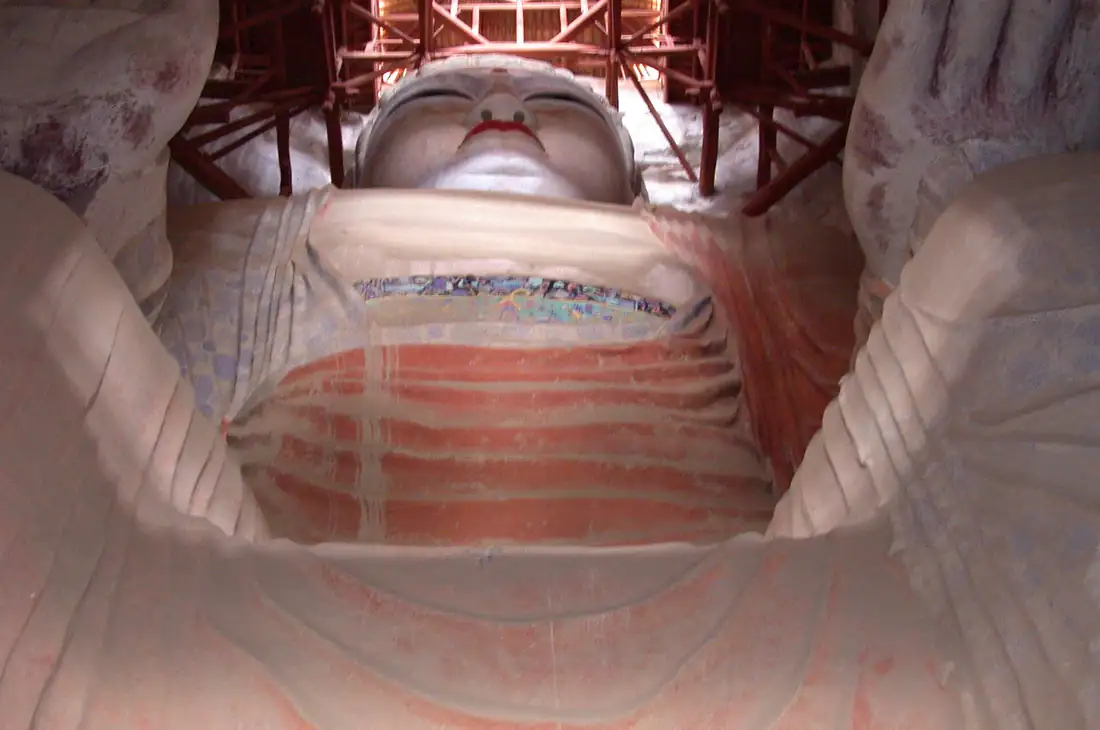
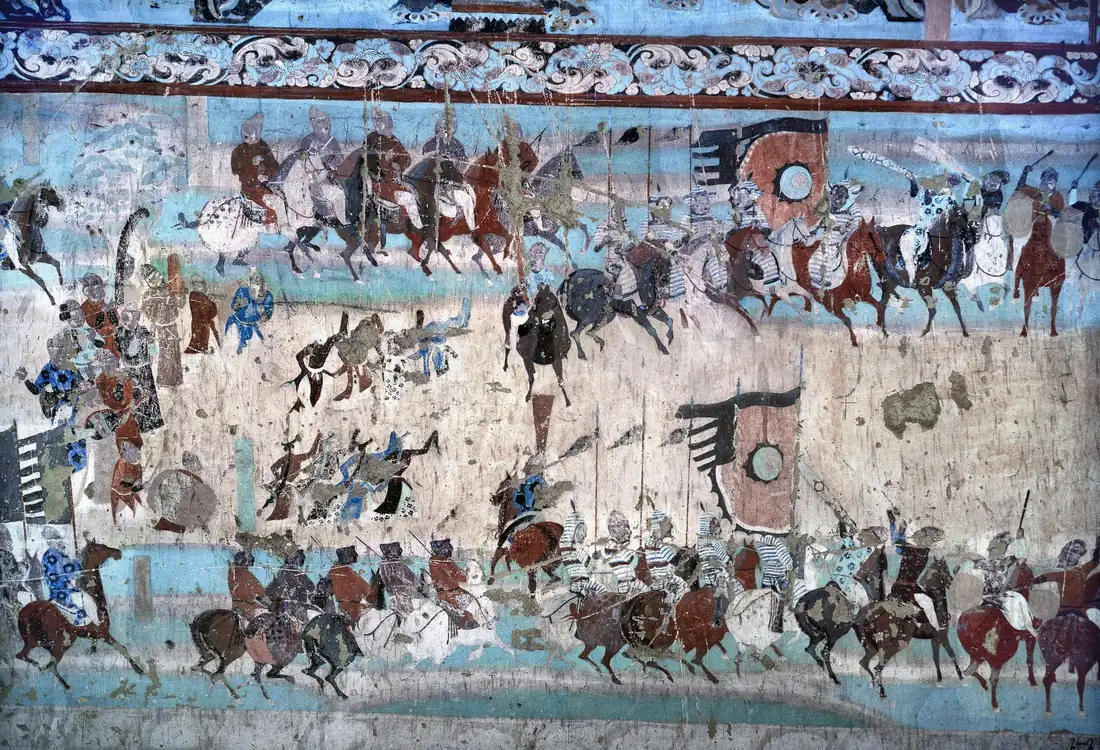
Photo credits
- “Jiucenglou of Mogao Caves” by 慕尼黑啤酒, CC BY-SA 3.0. Source
- “Cave 96 of Mogao Grottoes (20230918151944)” by N509FZ, CC BY-SA 4.0. Source
- “Caves 16-17 of Mogao Grottoes (20230918142815)” by N509FZ, CC BY-SA 4.0. Source
- “Great Buddha, Cave 96, Mogao Caves” by David Tansey, CC BY 2.0. Source
- “Mogao Cave 156 battle” by unknown painter, late Tang Dyanasty, Public domain. Source
Resized and cropped for the web.
Overview
The Mogao Caves, carved into the cliffs above the Dachuan River south-east of the Dunhuang oasis, were begun in 366 AD. UNESCO calls them the largest and longest-used treasure house of Buddhist art in the world.
Its 492 surviving caves hold about 45,000 square metres of murals and more than 2,000 painted sculptures, including scenes of trade on the Silk Road. They are a UNESCO World Heritage Site.
Sources
- Mogao Caves, UNESCO World Heritage Centre (text CC BY-SA IGO 3.0)
Last reviewed 29 September 2026
Plan your visit
Mogao Caves, Dunhuang
Review the details, then compare the journeys that include this place.
Ask about Mogao Caves, DunhuangJourneys in Mogao Caves, Dunhuang
No set journey goes here yet.
Tell us your dates, who is travelling and what you want to see, and our team will plan a trip to Mogao Caves, Dunhuang around you.
Plan your time in Mogao Caves, Dunhuang.
Tell us your dates, who is travelling and what you want to see, and we will help you choose the right journey.